
Reasons a crypto exchange freezes an account, and how to read them
Published: Last reviewed: How we edit
Five causes explain most exchange freezes: an identity check that is unfinished or failed, an AML flag on money you received, activity at odds with your profile, a new location or device, and a legal or regulatory request. Notices often name just a category. So read yours slowly, and answer exactly what it asks, as the first small step.
Not sure what to do next? Write to us:
Most freezes are a compliance status, not a verdict
A regulated exchange has to verify its customers and watch their transactions. If an automated rule or a human reviewer spots something that needs explaining, the account moves into a restricted state until the review is finished.
Usually nobody is accusing the account of anything. It is waiting on information the exchange is obliged to collect. This is why what your answer contains, and how complete it is, counts for more than how loudly you complain.
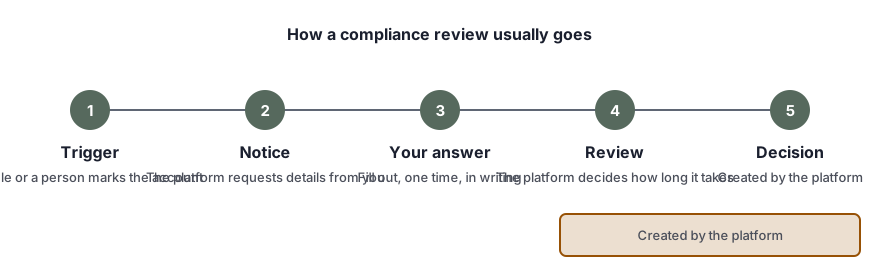
The five usual triggers
Treat these as general patterns. Every exchange applies its own rules, and your notice may not say which trigger is at work.
- Identity verification: documents that are expired, unreadable, mismatched or suspected of alteration, or a verification level too low for what you now do.
- Incoming funds flagged: an analytics provider ties the sending address to risky services, or the exchange simply cannot follow the money to a clear origin.
- Activity that clashes with the profile: volumes, speed or counterparties that differ from what the account declared.
- Location and device changes: sign-ins from a new country, or from a network that hints at a restricted jurisdiction, or signs that another person is using the account.
- Legal or regulatory requests: a court order, a law enforcement request, or a match tied to sanctions.
How to read your notice
Look for three things: what the exchange wants from you, by which date, and through which channel. Asking for source of funds is a different matter from asking you to re-verify your identity, even if both arrive under one ticket title.
When the message is generic, keep it and ask one precise question: which information is needed to complete the review. Keep every reply in writing.
Your first days: what to do
For now, the goal is one complete, consistent answer, sent a single time through the channel the exchange named.
- Do not shuffle funds between wallets or exchanges to dodge the freeze. Each new transfer gives you more activity to explain.
- Pull together bank statements, purchase receipts and older exchange exports, anything that proves where the money came from.
- Answer through the official channel the notice names, and note the reference number.
- Never give your seed phrase, private keys or password to anyone who offers help, and that includes anyone who writes to you first.
When outside help is worth it
A review with no end date, repeated rejections, a large amount, or a flag you think is a false positive are all good reasons to bring in structured support. A specialist can uncover the real question behind the notice, test your evidence for holes and write the reply.
No outcome is ever promised by us. The exchange decides, and some cases have no route. A good adviser tells you that early.
Questions people ask
What is the longest an exchange may hold an account frozen?
No single limit applies. The length depends on the exchange, the reason and how soon the questions get answered. Many reviews close once the requested documents arrive, while others stay open as the exchange waits on an authority.
Am I able to withdraw during a review?
Withdrawals are usually restricted while a compliance review runs. Some exchanges allow a withdrawal to a verified bank account or back to the original source address. Ask the exchange which options exist in your case.
Am I being accused of a crime if my account is frozen?
By itself, no. Routine compliance steps cause most freezes. When a legal request is behind it, that is different, and the notice generally says so.
Should I pay someone who says they can unfreeze my account fast?
Take real care. Only the exchange itself can lift a freeze, and no outsider can do it on request. Upfront payments, promised results and any request for your seed phrase or password are warning signs.
How we can help
- Getting an exchange account unblocked. Learn what the exchange is asking, gather KYC and AML evidence, then answer and appeal.
- Find out who froze your crypto. Learn who is behind the freeze and which next steps are realistic.
- Packs for source of funds and wealth. We can help you compile clear documentation showing your source of funds and wealth for banks and exchanges.
This page gives general information only. It is not legal advice.