
Filing a complaint about a crypto platform with a regulator or ombudsman: how to get it ready
Published: Last reviewed: How we edit
A complaint to a regulator or ombudsman can push a platform to respond when it has ignored you, but only if that body exists and covers the platform. That depends on your country and on the platform's licence status. A strong complaint is brief, dated, and supported by documents. We help you review the available routes, build a chronology, and prepare the filing. We cannot make a regulator act.
Not sure what to do next? Write to us:
Everyday situations
- Exchange account frozen for months without any written reason given
- Platform did not respond to multiple formal complaints submitted via its own support channel
- Withdrawal declined after account closure, with no appeal path provided
- It is not clear if the platform holds a licence where you live
- Marketing claims or fee changes that were misleading and touched your funds
- A card or payment provider tied to a crypto service turned down your chargeback or dispute
This fits if you
- The platform has gone quiet and its own complaints process is exhausted
- You want to find out whether a regulator or ombudsman in your country covers the platform
- You wrote to a regulator already and only got a form reply with nothing done
- You want a tidy timeline and evidence pack ready before filing
How the case runs
- No-cost evaluation
Start with a brief summary and the platform's name, one thing at a time. We reply in writing with which complaint routes appear to be open, how solid the file looks so far, and whether we can help.
- Set the scope together
You get a written scope and fee model covering the preparation work, plus the independent lawyer if one is needed. Saying no costs you nothing.
- Gather and sort your evidence
First, upload your documents through a secure channel. Then we build the chronology together. Before anything is filed, we flag gaps or conflicts in dates and amounts.
- Submit the complaint
You read through the finished wording one last time. The complaint goes in via the official form or address of the body, and you save the confirmation and reference number it gives you.
- Follow up and reply
When the case handler asks for something, we help you answer and walk you through what each reply means. If the body says it cannot take the case, we say so in plain words.
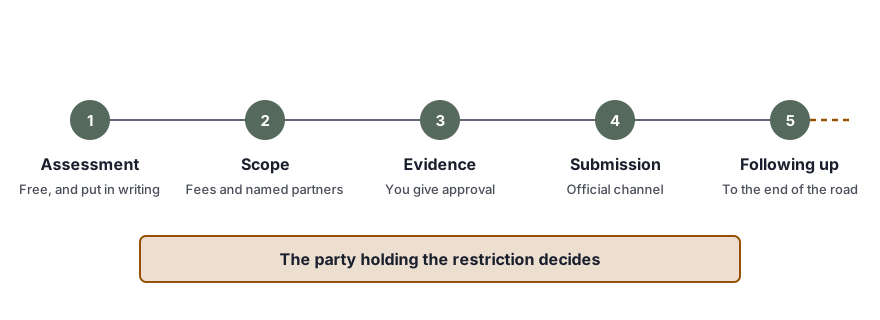
What we do
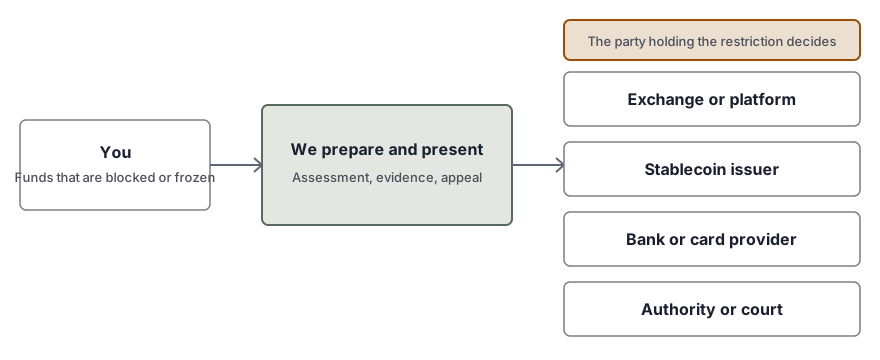
- See which complaint routes fit your case
First, we check three simple things: where you live, where the platform runs its business, and which licence it says it holds on its public pages. From there, we put together the options that could apply, for example a financial regulator, an ombudsman, a consumer agency, or the dispute process of a payment scheme.
- Put events in order
We arrange your messages, tickets and screenshots into a numbered timeline with dates. Every event links to one piece of evidence, so a case handler can follow the story on their own.
- Get your evidence pack ready
We gather your statements, platform notices, terms of service and any proof backing your complaint. Then we strip out duplicates and anything off topic, so the filing keeps its focus on the facts that count.
- Write the complaint
We draft a plain, factual complaint: what went wrong, what harm it caused, what you have already tried, and the outcome you are asking for. Claims we cannot back up stay out, and we follow whatever format the body requires.
- Bring in a lawyer if needed
Some cases call for formal steps, like a claim or a notice before action. When that happens, we introduce an independent licensed lawyer. They work for you directly, under their own terms.
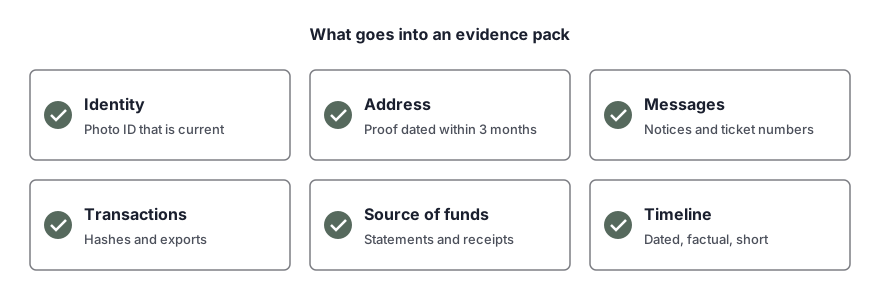
What to have ready
- The exchange's official name, its registered address, and any licence number it displays publicly
- Your account details and the transaction history covering the period involved
- Every complaint you sent to the platform, along with what it answered
- The terms of service and fee schedule in force at that time
- Screenshots of any error messages, notices or restrictions you received
- A government-issued photo ID and a document proving your address
- Statements from your bank or card if a payment provider is caught up in the dispute
What we cannot do
- We cannot make a regulator, an ombudsman or a platform act, and no decision in your favour can be promised. They work under their own rules and powers.
- Some crypto platforms fall outside every complaint body where you live. If that is true for you, we tell you up front and do not promise an outcome.
- We never threaten a platform or make public accusations we cannot back up with proof.
- Your seed phrase, private keys and passwords are yours alone. We never request them, at any point.
Questions people ask
Can I file a complaint with a regulator against a crypto exchange?
This is not always possible. It depends on where you live and whether the exchange has a license or registration there. Some regulators only take complaints about companies they oversee. Others send consumer issues to a different agency. The options are different in each place.
What does a financial ombudsman do, and does it apply to crypto?
A neutral ombudsman is a separate organization that assists with disputes between you and a financial firm. Whether specific crypto platforms are covered depends on two things: your country and the platform's license status. This is the part we cannot change. Some platforms qualify for this review, but many do not.
Does it matter whether the platform holds a licence?
Yes. If the platform holds a licence where you live, a local regulator or ombudsman is more likely to have authority over it. One without a licence, or based offshore, often falls outside these routes. That narrows what you can do.
What does a complaint need in order to work?
Being clear. In a few sentences, describe what happened. Add a timeline with dates, attach proof for each step, and state plainly what outcome you want. Emotional letters and claims without evidence are easier for an office to dismiss.
Is the platform the first place to complain?
In most cases, yes. Regulators and ombudsmen often expect you to try the platform's own complaints process first, and they may want proof that you did. So keep every message you send, the final reply you get, or the fact that no reply came.
Can a regulator get my funds back?
Usually not on its own. A regulator can look into the firm or press it to answer you. An ombudsman may hand down a decision. But neither can promise your funds come back, and we promise no outcome either.
How long it takes
Response times vary a lot between regulators and ombudsmen, and some take months to get back to you. Writing up the complaint itself usually takes days, once your documents are gathered. After the assessment we share an estimate with you, and we keep it current as the body responds.
Fees
We understand you may be feeling stressed right now. The assessment of your specific case is complimentary. Afterward, we will send you a clear written scope and fee model for the preparation. We never request payment before we have confirmed if we can help you. Fees →
Related situations
- Getting an exchange account unblocked. Learn what the exchange is asking, gather KYC and AML evidence, then answer and appeal.
- Help closing your account and leaving the platform. Account closed with funds still inside: we help with written requests and escalation.
- Blocked crypto card or payment account help. Card, neobank or processor account frozen? Find what triggered it, gather proof, then appeal.
- Support for frozen P2P trade funds. If your bank or exchange blocked money after a P2P trade, write down the trade details and file an appeal.
Read next
This page gives general information only. It is not legal advice.