
A flag on your wallet or deposit: gathering proof and pushing back
Published: Last reviewed: How we edit
Screening tools rate wallets by the company they keep, like mixers, darknet markets or sanctioned addresses. A high score can freeze a deposit even when your own conduct was clean, because the link may be several hops away. Flags can also be wrong or stale. We help you trace where your funds actually traveled, put that in writing and raise the dispute with the exchange. We do not assist in hiding illicit funds.
Not sure what to do next? Write to us:
Everyday situations
- Deposit landed, then got held back once an address screening alert appeared
- Funds received from a peer-to-peer trade whose sender wallet touched a mixer years ago
- Your wallet received a small unsolicited transfer and was labeled with sanctioned exposure.
- The exchange refuses to state the exact reason, giving only a high risk score.
- Withdrawal is blocked because a previous deposit was linked to a flagged cluster.
- Company wallet got flagged because a client sent payment from a risky address
This fits if you
- An exchange held or refused your deposit, pointing to a high risk score
- You got crypto from a person or a shop, then learned it touched a mixer or darknet indirectly
- A free checking tool shows a risk label on your own wallet, with no explanation
- A compliance team queried a counterparty you hardly know at all
How the case runs
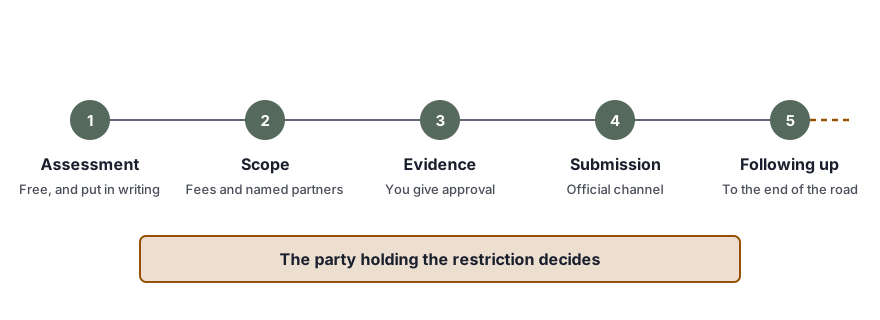
- No-cost evaluation
You start by telling us what was flagged and passing along the notice you received. We answer in writing: whether this points to a false positive, indirect exposure or a harder problem, and whether we can assist.
- Fees and scope, in writing
If we move forward, you receive the scope in writing, the names of the independent analysts, and how fees work. No payment happens until you have read it and said yes.
- Look at the transactions
The analysts go through the flagged transactions and trace the path step by step. You get a summary in plain words of what the blockchain shows, and of what it cannot show.
- File the dispute
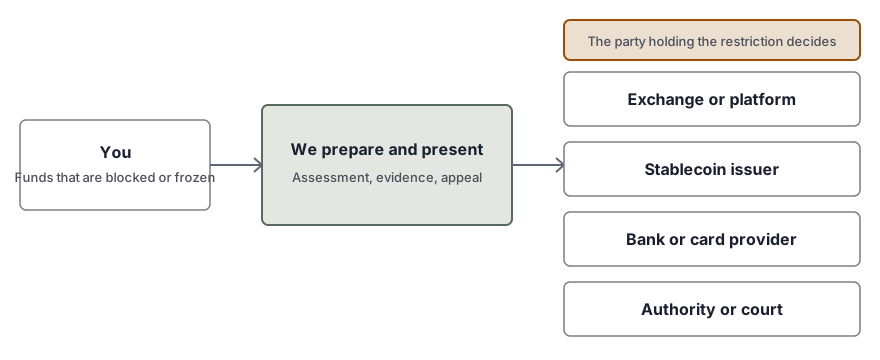
We pass the dispute and its evidence pack to the exchange, and, where it fits, a correction request goes to the vendor. Copies and reference numbers come straight to you.
- What comes next, and after that
We watch for replies, handle any follow-up questions, and tell you plainly whether the flag holds up or no route is left.
What we do
- See what the flag really means
We ask the exchange for the screening vendor and the exposure category. Next, we look at what that high score means in that tool. Direct links to a risky service weigh much more than indirect exposure.
- Follow where your funds actually went
Our independent analysts follow transactions from your wallet to the starting point. We also trace the path forward to the flagged entity. This result shows if the exposure is direct, indirect, or unrelated to your own activity.
- Write your side in plain words
First, we sit down with you and put the story of your funds on paper: how they came to you, who sent them, and for what reason. Then we gather the paper trail, the chat records and the receipts. A reviewer checking your case needs one steady, dated account.
- Answer the flag with the exchange
Next, we build a clear, organized dispute: it lists each transaction, explains why the exposure was indirect or simply wrong, and requests a defined review. We keep every line plain and factual, and we file it through the exchange's official channel.
- Report errors to the analytics vendor
Sometimes the screening data itself is off, like an old label or a cluster linked to the wrong wallet. When that happens, we help you send a correction request to the screening vendor, most often through the exchange or the vendor's own dispute form.
What to have ready
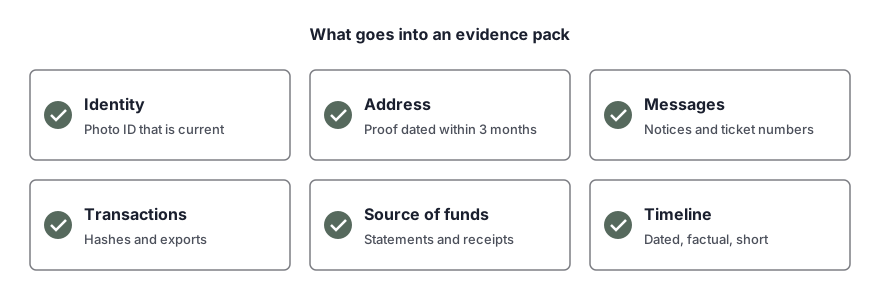
- The exchange notice or email that names the risk flag
- Wallet addresses and transaction hashes that were involved
- Proof of where the funds came from: receipts, invoices, chat logs or bank transfers
- Who the counterparty is, if you know, plus any contract or order
- Screenshots of any third-party risk checker output
- Government ID and proof of address, should the exchange request them
- A brief written timeline covering the transfer and the first alert
What we cannot do
- We can't make an exchange or a screening provider remove a flag. That call is theirs, under their own rules and the laws that cover them.
- We do not hide, clean or mix money of illicit origin, and we turn down cases where the funds look like they come from crime.
- If the review confirms the flag was right, we tell you plainly, and we cannot promise any outcome.
- Your seed phrase, private keys and exchange passwords stay private. We will never request them.
Questions people ask
What does it mean when a wallet is flagged as high risk?
A screening tool has flagged the address as connected to a category like a mixer, a darknet market, or a sanctioned entity. That connection may be direct, or it may sit a few hops away. This is a signal that a review is needed, not proof that you did anything wrong.
Can a risk flag turn out to be a mistake on your record?
It can. Labels get old, wallets get lumped into the wrong cluster, and a little indirect exposure can push a score up more than it should. That is the reason a review at the transaction level is worth doing. No one here can promise the tool or the exchange will change its mind, but we can put the facts in front of them plainly.
Can a wallet flag actually be lifted?
No, we cannot take it off ourselves. The flag sits with the vendor and the exchange, not with us. What we can do is document why it may be mistaken and send a structured correction or dispute request through the proper channel.
Will you assist if the funds truly came from a mixer or a darknet market?
No. Hiding or cleaning illicit funds is not something we do. If the review finds a genuine link, we will say so plainly. We may still help you answer a lawful compliance request truthfully, bringing in an independent lawyer if needed.
What should I avoid doing once my deposit gets flagged?
Do not shuttle the funds through other wallets or services to slip past the review. That can read as evasion and make things worse. Leave the funds where they are, hold on to your records, and answer the exchange's questions honestly.
Will a free risk checker be enough to show my wallet is clean?
No. Free checkers draw on different data and scoring than the tool your exchange relies on, so a clean result there does not override it. It can still serve as one more piece of evidence in a dispute.
How long it takes
How long a review or dispute takes depends on the exchange's compliance queue and on how many transactions have to be traced. A short case with one clear path moves faster. After the assessment we share an estimate, then adjust it as replies come in.
Fees
The assessment costs nothing. After that, you get a written scope and fee model for your case. We ask for no payment until we have told you if we can help. Fees →
Related situations
- Support with sanctions and AML false positives. Sanctions or AML flag by mistake: an evidence pack plus a statement filed by a lawyer.
- Reading a blockchain analytics report. A traced source-of-funds report, written for a compliance team to use.
- Getting an exchange account unblocked. Learn what the exchange is asking, gather KYC and AML evidence, then answer and appeal.
- Find out who froze your crypto. Learn who is behind the freeze and which next steps are realistic.
Read next
This page gives general information only. It is not legal advice.